Authentic Vietnamese Caramelized Pork Belly (Thit Kho Tau)
Vietnamese Caramelized Pork Belly (Thit kho tau) is classic comfort food of Viet families. Pork belly is slowly braised until it has a beautiful caramel color and becomes so flavorful and tender.
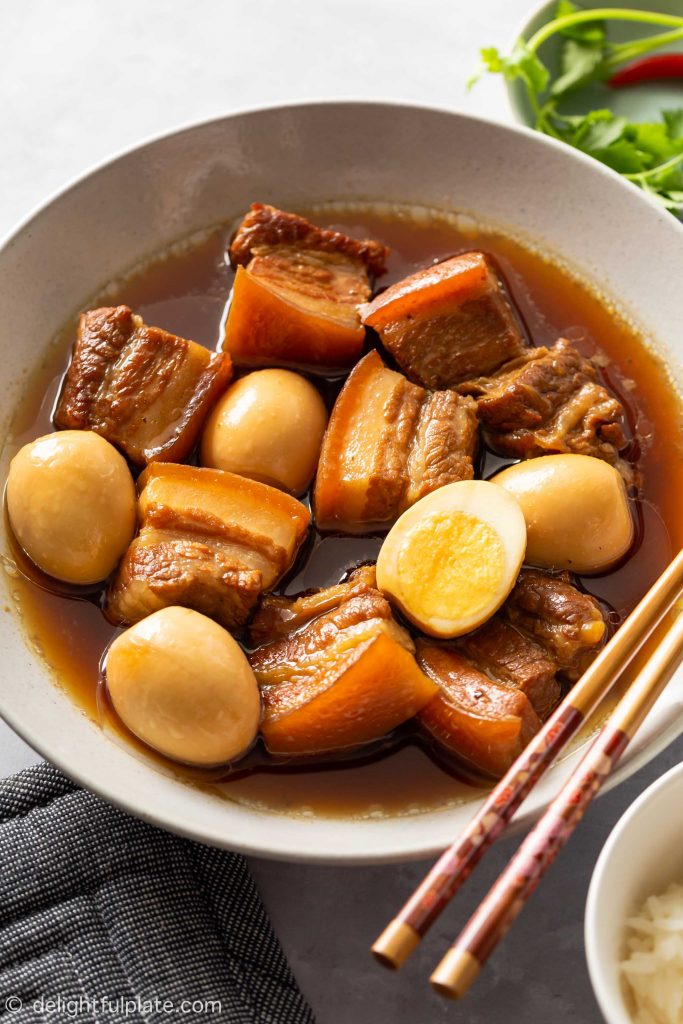
🥘 What is Vietnamese Caramelized Pork Belly (Thit kho tau)
Caramelized Pork Belly is in the daily rotation of many Vietnamese families. We call it “thit kho tau” (or just “thit kho” for short). Eggs can also be added to the dish, and then we will call the dish “thit kho trung“. The version with eggs is a must-have in the Lunar New Year feast of Southern Vietnamese people.
Basically, pork belly is braised with caramel sauce and fish sauce until the meat is flavorful and tender. You can watch how to cook the dish in the video below.
🎬 Recipe Video
[adthrive-in-post-video-player video-id=”b3Q8wf8h” upload-date=”2020-04-01T00:00:00.000Z” name=”Vietnamese Caramelized Pork Belly (Thit Kho Tau)” description=”Vietnamese Caramelized Pork Belly and Eggs (Thit kho tau) is a classic comfort food of Viet families. Pork belly is slowly braised until it takes on a beautiful caramel color and becomes so flavorful and tender.” player-type=”default” override-embed=”default”]There are actually some slight differences between the Northern and Southern versions.
- Northern version: on the salty side, has less sauce, the braising liquid can be plain water, and the pork belly chunks are often smaller than in the South.
- Southern version: on the sweet side, has more sauce, often braised with fresh coconut juice, and the pork belly chunks are bigger.
We grew up with the Northern caramelized pork belly, but our favorite version, which we’re sharing today, combines the best of the Northern and Southern styles with a perfect balance of sweetness and saltiness.
🛒 Ingredients
Pork belly
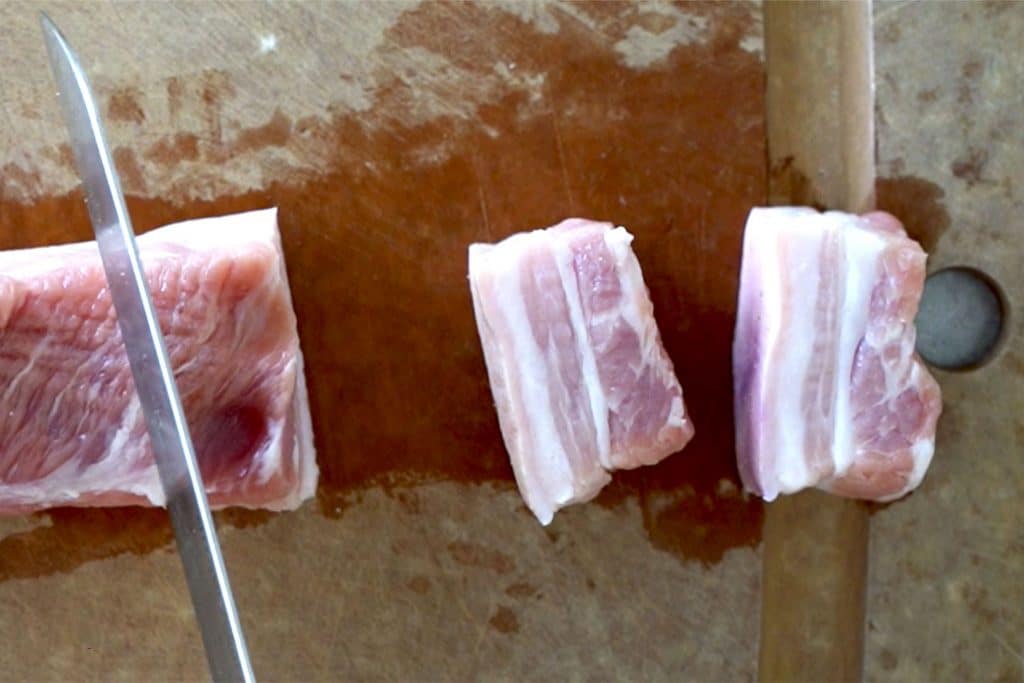
Try to find one that has more meat than fat. Some people who don’t like fattiness may use other cuts like pork shoulder. However, thit kho tastes best with pork belly. I don’t like pork fat and always discard the fat when eating but I always use pork belly.
Related: this lemongrass pork belly recipe will show you a different way to cook this cut of pork if you are interested.
Sugar
You will need sugar to make the caramel sauce. In the video, I used golden granulated sugar, which is less refined than white granulated sugar, but there’s no other differences. Vietnamese families always use granulated sugar for this dish. We don’t use brown sugar.
Eggs
Eggs are optional, but I do enjoy the dish more with eggs. You will need to boil the eggs before adding them to the braised pork belly. Viet families may use chicken eggs or duck eggs depending on their preferences.
There is another variation of the dish where the boiled eggs are fried until they have a blistered and golden crust before being cooked with the meat. Though it is really on another level of deliciousness compared to simply using boiled eggs, it’s kinda a pain to fry those boiled eggs with all the blistering and splashing. You may want to give it a try if you aren’t afraid of those cons :).
Other ingredients
You will also need these seasonings and aromatics: garlic, shallots, fish sauce, salt and pepper. Use fresh coconut juice to braise the pork for a pleasant richness and sweetness.
🍳 How to Cook Thit kho tau
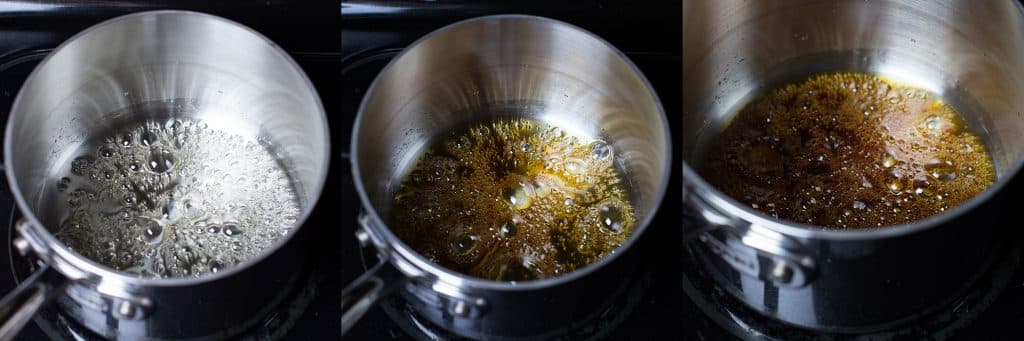
1️⃣ As you can see from the video, the trickiest part of this dish is probably making the caramel sauce. Make sure you watch it closely since it can burn really fast and be really careful when adding water. If you want your caramelized pork belly to look lighter or darker, you can use less or more caramel sauce.
2️⃣ It’s not necessary to marinate the meat for a long time. Just set it aside at room temperature for 10-30 minutes depending on how much free time you have. Then sauté the pork and braise with the caramel sauce until tender.
❓Can Vietnamese Caramelized Pork Belly be Frozen
Yes, surprisingly, this dish can be frozen quite well but without the eggs. You can store the braised pork along with the sauce in Ziploc freezer bags for 1-2 weeks. Though it takes a little over 1.5 hours to cook, you can easily make a big batch and freeze it.
When you want to eat it, thaw and reheat on the stove, at which point you can add some eggs if you want. We tried it ourselves and felt that the flavors were not impacted.
🥢 How to Serve Thit Kho Tau

Vietnamese families usually serve thit kho tau (or thit kho trung) with white rice. Another option is to serve it with steamed sticky rice (such as xoi xeo sticky rice with mung bean), also a classic combination in Vietnam.
Thit kho tau can even be eaten with banh mi. Slice the pork belly and eggs into thinner pieces and stuff inside banh mi. Then drizzle some sauce over and sprinkle some black pepper.
Related Recipes
These caramelized dishes such as this caramelized pork belly and this caramelized fish are the signatures of Vietnamese cuisine, so I hope you will give them a try.
Here are some more traditional Vietnamese pork dishes:
⭐️ I’d love to hear what you think about the dish, so please feel free to leave a comment. New recipes are added every week so let’s connect on Facebook, Youtube, Pinterest and Instagram for the latest updates. You can find my collection of Vietnamese recipes here.

Vietnamese Caramelized Pork Belly (Thit kho tau)
Ingredients
- 2 lbs pork belly
- 4 garlic cloves, crushed
- 3 shallots, crushed
- 1 teaspoon salt
- 1/2 teaspoon black pepper
- 2 tablespoons granulated sugar
- 3 tablespoons water, divided
- cooking oil
- 3-4 tablespoons fish sauce (more or less to taste)
- 3 cups fresh coconut juice (about 2 coconuts)
- 6 eggs (more or less to your liking)
Instructions
- Slice pork belly into 1-inch thick (or slightly thicker) pieces. In a bowl, toss the pork with crushed garlic, shallots, salt and pepper. Set aside at room temperature for 10-20 minutes.
- In a small saucepan, add 2 tablespoons of sugar and 2 tablespoons of water. Bring to a boil, the sugar will fully dissolve. Lower the heat to medium, continue to simmer. You will see a lot of bubbles on the surface. The mixture will then turn from clear to yellow, and get darker as you simmer it. When it has a honey color, reduce the heat slightly. Keep watching closely, until it has a dark caramel color, turn off the heat and carefully add 1 tablespoon of water. Swirl the saucepan (or stir) to combine and remove it from the stove. Set aside.
- Place a heavy-bottomed pot over medium heat and add a small amount of cooking oil. Once the oil is hot, add the pork belly, along with all the crushed garlic and shallots, and the caramel sauce. Stir and cook to coat the pork with the caramel sauce and then add fish sauce. Continue to stir and cook.
- Once the outside of the pork is no longer pink, add coconut juice enough to cover the meat. Bring it to a boil and skim off all the foams, then lower to a simmer.
- Cover the pot with the lid slightly askew and simmer until the pork is almost tender to your liking (about 75-80 minutes). You can give everything a stir once in a while for even cooking if you want.
- While braising the pork belly, boil the eggs so that they are just about to reach hard-boiled. Place the eggs in cold water to cool down, and then peel them.
- Once the pork is almost tender, add the eggs (make sure they are surrounded with the braising liquid). Cover and simmer for about 10 more minutes.
- Transfer the caramelized pork belly and eggs along with the sauce to a shallow serving plate. Serve hot with white rice.




Hi Sophie! Thank you for sharing the recipe…one quick question…my pork belly isn’t turning that delicious caramel color like you have in your video (even though I made a dark caramel sauce and added fish sauce too). Did I perhaps not saute/fry it enough in the oil before adding the coconut juice? My broth is the right color but not the pork, thanks!
Hi Steph,
Thank you for the question. I think increasing the sautéing time will help with the color. Before adding the coconut juice, you should stir-fry the meat until it has been coated well and absorbed the caramel sauce and most of the fish sauce (don’t let the pot dry up completely). It does not need to be cooked all the way through yet, but the outside should have deeper color and firm up a bit. If this still does not help, you can try increasing the amount of the caramel sauce.
If you make the dish again, please let me know if this helps :).
isnt that chinese?
Hi,
This is a traditional Vietnamese dish. I know other cuisines such as Chinese and Japanese also have braised pork belly dishes, but the seasonings are not the same.
When we make this we wrap it up in rice paper with noodles and veggies and dip it in the sauce it’s cooked in. 🤤🤤
That’s an interesting way to serve it and I’ve never tried it like that. Thank you for sharing :)!
Thank you for reminding me to blister the eggs!
This Vietnamese Caramelized Pork belly is so delicious! But I made my version saucy; added a bit of authentic Oyster sauce that I bought at Karman Foods for a stickier sauce. It was so flavorful!
This recipe is perfect. My relatives used to cook this for me when I was younger and I wanted to recreate it recently without reliance on too many additives or ingredients that would be difficult to find here in the UK. The result was a 100% delicious and authentic-tasting thịt kho dish! Thank you!
Hi Phuong Anh,
Thank you so much for the comment! It’s great to hear it turned out delicious and just as how you used to have it when you were younger :). I remember when I studied in London (quite many years ago), it wasn’t easy to find special Vietnamese items at regular grocery stores. Things probably have changed now I guess.
It was so easy to make. I like to watch the video with instructions on how to cook this dish step by step. Thanks so much
Hi Kimvi,
I’m very glad you found the video helpful and successfully made the dish. Thank you for your comment!